
SGEISabet Gostar ElectricRequest a quote
Menu

Technical guide · Updated 2026

How to Select an Electrical Contact Material

Contact material selection starts with the complete switching system—not a material name alone. Load type, inrush current, arc energy, contact force, frequency, environment, and target life all influence the result.

Electrical contact rivets in several silver-alloy material systems

Define the electrical duty first

Nominal current is only one input. Resistive, inductive, motor, lamp, capacitive, and mixed loads can produce very different inrush and arc conditions at the same nameplate current.

Record AC or DC voltage, steady current, inrush current, power factor or time constant, make/break frequency, contact form, and target operating life before comparing materials.

  • Load composition and inrush
  • Voltage and current
  • Switching frequency
  • Target electrical and mechanical life

Compare material families against the duty

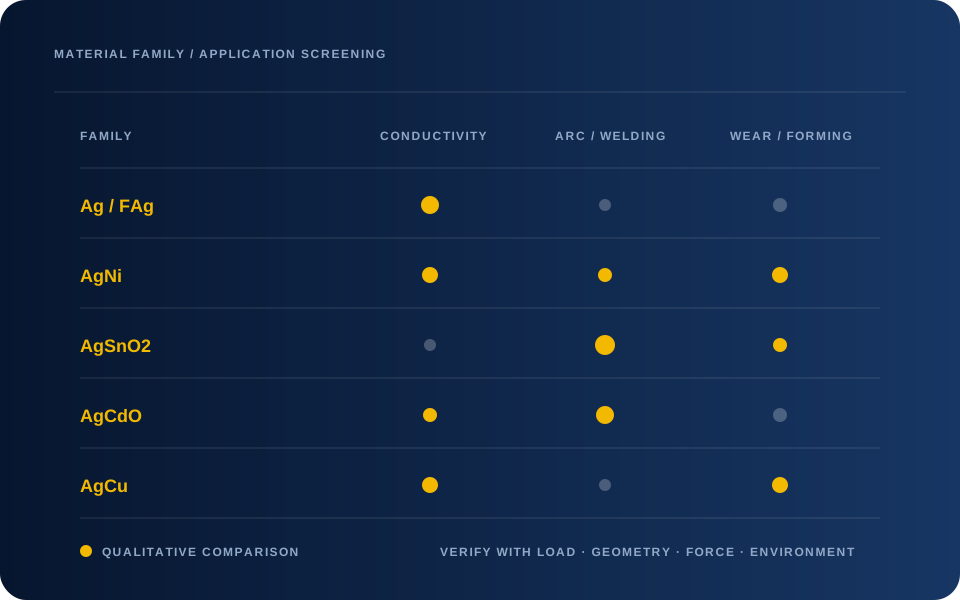
Silver nickel provides a useful balance of conductivity, wear, and manufacturability for many relay and control applications. Silver tin oxide is often considered where welding and arc erosion under higher loads are major concerns.

Fine silver and selected composites can suit low-energy circuits when surface condition and contact mechanics are controlled. Silver copper can add hardness for selected mechanical and electrical duties. AgCdO may remain in validated legacy designs, but applicable material restrictions must be checked.

Include contact mechanics and environment

Contact force, bounce, travel, opening speed, wiping action, alignment, and heat removal change the conditions seen by the working surface. Environmental films, humidity, dust, vibration, and corrosive atmospheres can be equally important at low signal levels.

The same alloy can perform differently when geometry, attachment, contact pressure, or thermal path changes. Material review should therefore be tied to the production drawing and the complete assembly.

Validate the proposed contact in the final system

Catalogue guidance is useful for screening, not final approval. Confirm samples under representative electrical, mechanical, thermal, and environmental conditions before production release.

A useful validation plan records resistance stability, temperature rise, welding, erosion, transfer, dimensional wear, and failure criteria across the required operating life.

Frequently asked questions

Can contact material be selected from current alone?

No. Load type, voltage, inrush, arc conditions, contact force, geometry, environment, and target life must also be considered.

Is AgSnO2 always better than AgNi?

No. Each material family has different electrical, mechanical, manufacturing, and cost trade-offs. The correct choice depends on the verified switching duty.

Should a new contact be life-tested?

Yes. Final selection should be validated in the customer’s complete switching system under representative conditions.

Discuss your application with SGEI

Send the switching duty, drawing, dimensions, and forecast quantity for a focused engineering review.

Start an RFQ