
Solid contact rivets
A solid contact rivet uses the selected contact material throughout the rivet. This can simplify the material definition for compact parts where the complete geometry is compatible with the alloy and the application justifies a solid construction.
The designer must still verify forming behaviour, attachment, thermal path, material usage, and dimensional control.
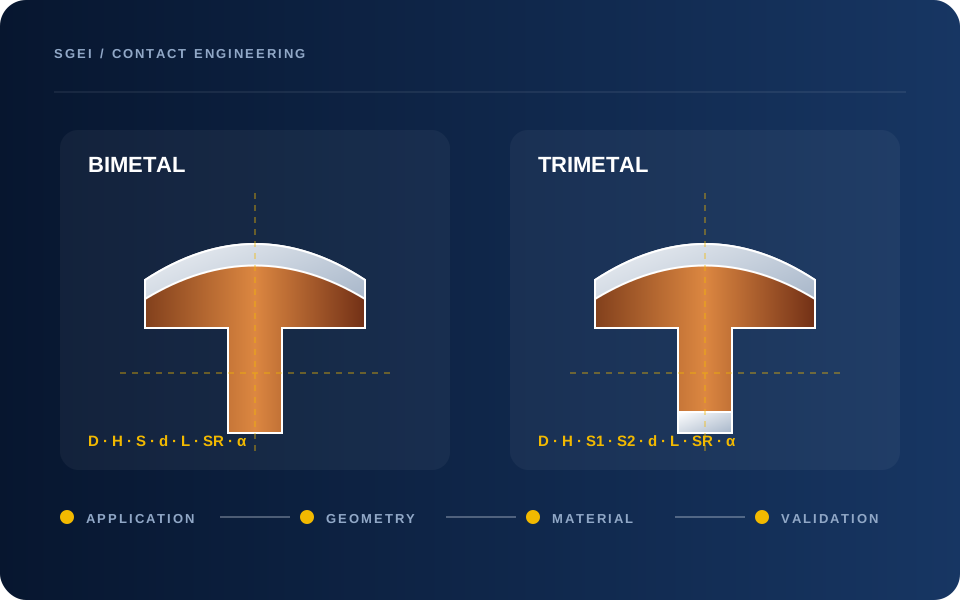
Bimetal contact rivets
A bimetal rivet combines a functional contact layer with a different supporting body material. The working alloy is concentrated at the switching face while the shank and supporting geometry can be optimized for attachment and material efficiency.
The interface, layer thickness, head geometry, and manufacturing process become controlled characteristics of the finished contact.
Trimetal contact rivets
A trimetal construction uses three defined material regions to address the working surface, supporting body, and attachment or interface requirements. It is useful when one body material cannot satisfy every functional and manufacturing need.
Precious-metal placement, interface integrity, rivetability, and final assembly performance must be specified together rather than as independent choices.
What the production drawing should control
A production-ready drawing should define head diameter and height, shank diameter and length, radii, concentricity, layer dimensions, materials, surface condition, tolerances, and inspection criteria.
- Working-layer diameter and thickness
- Head and shank geometry
- Material interfaces
- Attachment and inspection requirements
Frequently asked questions
Why use a bimetal contact rivet?
It places the functional contact material at the working surface while using a different body material for support, attachment, or material efficiency.
Is a trimetal rivet always lower cost?
Not automatically. Cost depends on geometry, material volumes, tooling, process complexity, inspection, and production quantity.
Can SGEI manufacture to a customer drawing?
Yes. SGEI reviews made-to-drawing contact-rivet requirements using the supplied materials, dimensions, tolerances, duty, and forecast quantity.
Discuss your application with SGEI
Send the switching duty, drawing, dimensions, and forecast quantity for a focused engineering review.
Start an RFQ
